
 Dra. Lisbania Peguero

They almost always arrive the same way: paper in hand and a sleepless night behind them. They searched “HPV” online and the first word they read was cancer. So let us start where we should: a positive HPV result does not mean you have cancer, it does not mean you are going to get it, and it does not mean anyone has been unfaithful.
HPV is so common that most sexually active people will have it at some point. Having it is not the unusual part — never having had it would be.
What HPV is and why it is so common
Human Papillomavirus is the most common sexually transmitted infection in the world. There are more than two hundred types and only a handful are clinically relevant. It spreads through skin-to-skin contact in the genital area, so condoms reduce the risk but do not eliminate it. In the vast majority of cases it causes no symptoms at all: that is why it is found on a test, not because you notice something.
- More than 80% of women will contract it at some point in their lives.
- Between 80 and 90% of infections clear on their own within one or two years.
- It can stay dormant for years, so it does not tell you when or from whom it was contracted.
- Most of the time it produces no noticeable symptoms.
Not all types are the same
This is the key almost nobody explains. Low-risk types such as 6 and 11 can cause genital warts: bothersome and unsightly, but they do not cause cancer. High-risk types, above all 16 and 18, are the ones that over time can produce lesions on the cervix.
That is why the first step after a positive result is not treatment, it is knowing which type it is. Testing with genotyping tells you exactly which one you have, and that completely changes the follow-up you need.
- Low risk (6, 11): may cause warts. They do not cause cancer.
- High risk (16, 18 and others): require follow-up, not immediate treatment.
- Having a high-risk type does not mean having lesions: it means monitoring.
- Genotyping is what tells you which of the two groups you are in.
What happens after the result
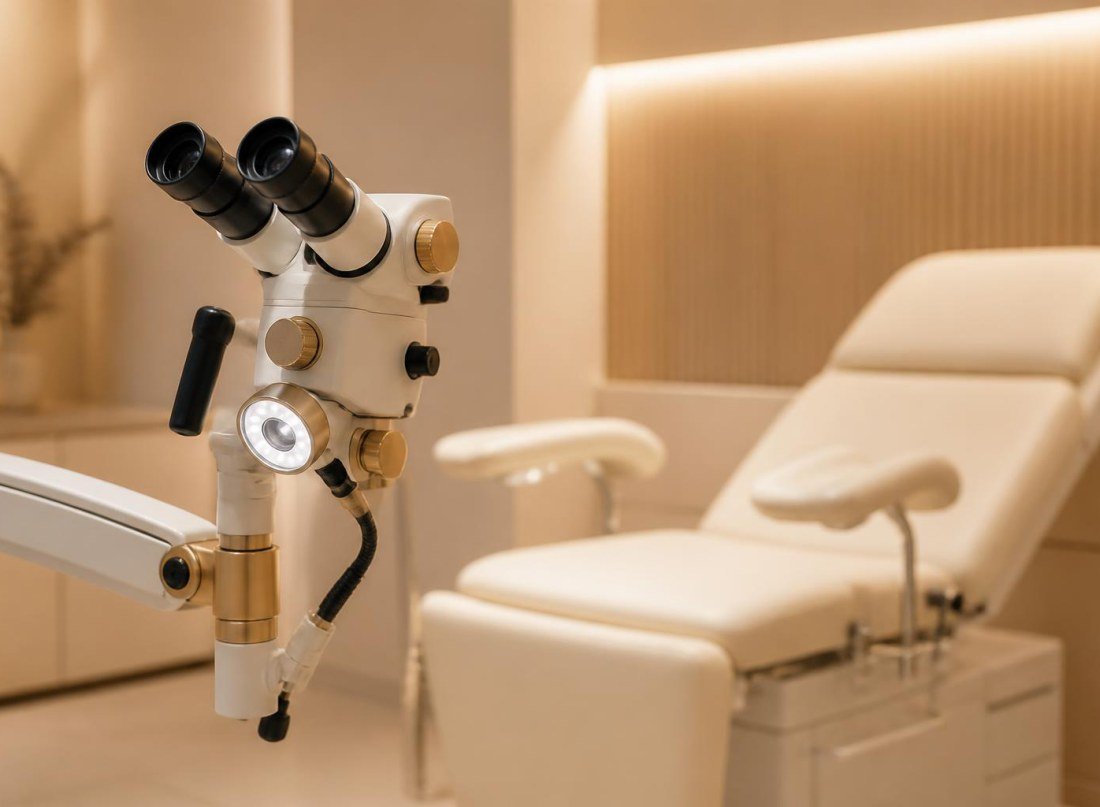
If the type is high risk, the next step is usually a colposcopy: the cervix is examined with magnifying equipment to see whether there is any lesion. If there is, a small biopsy is taken to determine its grade. And if treatment is needed, the lesion is treated, not the virus. There are simple, effective treatments — from trichloroacetic acid to cryotherapy or electrocautery — depending on the case.
What I am asked most, and rarely answered
Does it go away? The virus is not “cured” with a medication; your own immune system clears it, and in most cases it does. Can I get vaccinated if I already have it? Yes, and it is usually worthwhile: the vaccine protects against the types you have not yet contracted. Do I have to tell my partner? It is a sensible conversation, but without blame: there is no way to know who had it first. Can I have children? Yes, HPV does not affect fertility.
The only thing that really matters
Cervical cancer takes years, sometimes more than a decade, to develop from an initial lesion. That window is enormous, and it is exactly what makes follow-up the best tool we have. Women who attend their check-ups practically never develop cervical cancer. If you have a positive result, the thing to do is not to panic: it is to book the assessment and not miss the follow-ups.