Our process combines the latest technology with a professional approach.

 Dra. Lisbania Peguero
 +1 809-380-8397


Beyond treatments, our mission is to offer you a space of care and trust.

We join medical excellence with cutting-edge technology to offer you integral treatments.


Our mission is to care for the health and confidence of every woman with advanced, compassionate and personalized gynecological and aesthetic care, in a safe and discreet space.

To be the reference practice for gynecology and intimate aesthetics in Baní and the southern region, recognized for its human touch, medical ethics and responsible use of cutting-edge technology.
Expert medical care combined with close, caring support to guide you confidently at every step toward your intimate well-being.

We offer proven solutions for a wide range of intimate health needs.

We help you plan your long-term intimate well-being with personalized treatments.

Our process combines the latest technology with a professional approach.
In your first consultation, we focus on listening to you.
We develop a personalized treatment plan.

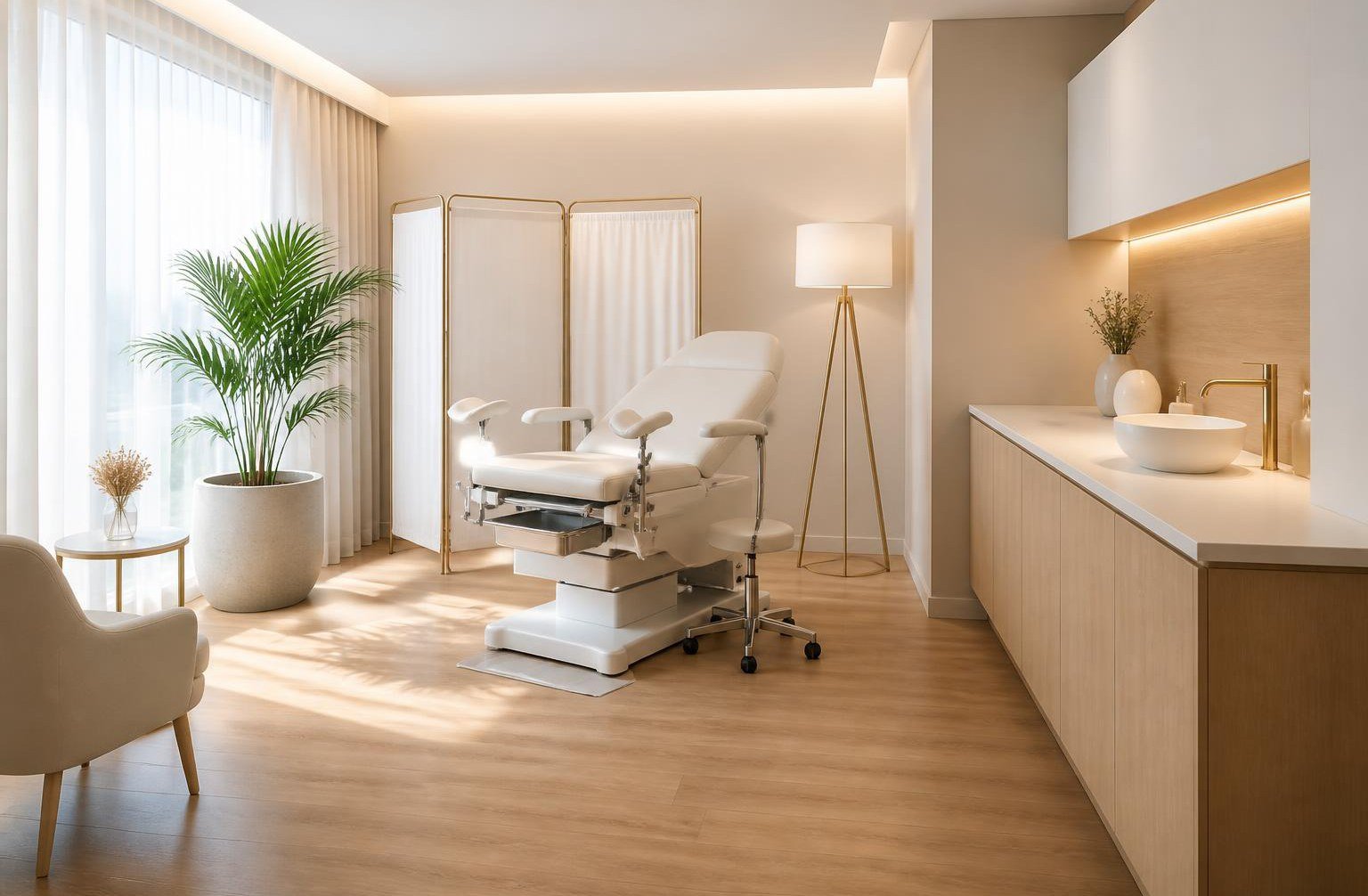
In a safe and sterile clinical environment, we prepare everything for your procedure.
Our professional team carries out the treatment based on the designed plan.

You will receive detailed instructions for your care at home.
We will perform a close follow-up to ensure everything evolves favorably.

With a commitment to excellence, we offer a full range of aesthetic gynecology treatments.
Patients Cared For

Years of Experience

Advanced Technologies

Specialized Services

With over a decade of experience, we are committed to providing the highest quality care.

Our focus is not just on numbers, but on people. Every achievement represents a life we have cared for.

Years of Experience
Specialized Services
Patients Cared For
Because we have a commitment to excellence and cutting-edge technology.

Dedicated care in gynecology, obstetrics and intimate aesthetics.

A career devoted to comprehensive women's health.

FRAXX, HIFU and CO₂ Laser for more precise, comfortable intimate treatments.
At the core of our work is the deep conviction that every woman deserves integral and transformative care.

Years of Experience
Our team of specialists offers you expert service.
Gynecologist-Obstetrician-Aesthetic

Surgeon

Secretary
Assistant
Find clear and reliable answers to the most common questions.


The consultation costs between RD$3,000 and RD$5,000, depending on the type of assessment needed. It includes the clinical interview, an examination where appropriate, and an explanation of the treatment options with their timings and costs. Procedures are quoted separately and in US dollars; you can review the ranges on each service page.
It varies by treatment. Non-invasive options such as vaginal rejuvenation with the FRAXX system (fractional radiofrequency with microneedles) take 20 to 40 minutes, which is more efficient than traditional laser, while procedures such as labiaplasty can take 35 to 60 minutes. At your first visit we assess your specific case and explain the exact timings.
It depends on the treatment and your goals. With our FRAXX fractional radiofrequency system, many patients see significant results in 2 to 3 sessions spaced 4 to 6 weeks apart, which is more efficient than conventional laser treatments. Surgical treatments such as labiaplasty usually require a single procedure. We will give you a personalized plan at your consultation.
Most of our patients report a noticeable improvement in their intimate comfort and well-being. FRAXX fractional radiofrequency works with great precision and controlled penetration, and labiaplasty usually brings very satisfying results. Still, every body is different and results vary from case to case, so at your consultation we assess your situation and explain realistic expectations before any treatment.
Yes, our treatments are very safe when performed by certified specialists with the right equipment. Side effects are usually mild and temporary: slight swelling, redness or sensitivity for a few days. Before any procedure we carry out a full medical assessment to rule out contraindications.
Most of our aesthetic gynecology treatments can be performed from age 18, once anatomical development is complete. Each case is assessed individually, taking into account medical history, motivation and expectations.
Ideally between weeks 6 and 8, or as soon as your period is two weeks late. At that first visit we confirm the pregnancy by ultrasound, calculate your due date, order the initial laboratory tests and start folic acid. The sooner prenatal care begins, the sooner we can detect and prevent complications.
In an uncomplicated pregnancy, between 8 and 12 visits. The usual schedule is monthly until week 28, every two weeks from week 28 to 36, and weekly from week 36 until delivery. If there are risk factors — hypertension, diabetes, a multiple pregnancy or a relevant history — follow-up becomes more frequent.
At least three. The first-trimester scan (weeks 11 to 14) confirms that the pregnancy is progressing well, how many babies there are, refines the due date and measures nuchal translucency. The anatomy scan (weeks 20 to 22) reviews the baby's full anatomy. The third-trimester scan (weeks 32 to 36) assesses growth, position, the placenta and amniotic fluid. Additional studies may be indicated depending on your case.
It is the scan performed between weeks 20 and 22, and it reviews the baby organ by organ: heart, brain, kidneys, spine, limbs and face. It is the point in pregnancy when malformations are most reliably detected, which is why it takes 30 to 45 minutes, considerably longer than a routine scan. It is the one study you should not skip.
In the first trimester: complete blood count, blood type and Rh factor, blood glucose, urinalysis and urine culture, HIV, syphilis, hepatitis B, toxoplasmosis and rubella. Between weeks 24 and 28 the blood count is repeated and the glucose tolerance test is performed. In the third trimester the basic tests are repeated and a vaginal and rectal culture is taken for group B streptococcus.
Between weeks 24 and 28, with the glucose tolerance test. If risk factors are present — excess weight, a family history of diabetes, or gestational diabetes in a previous pregnancy — it is brought forward to the first trimester. Detecting it early means it can almost always be managed with diet, avoiding complications for both mother and baby.
If this is your first pregnancy, between weeks 18 and 22; if you have had children before, you may notice it from week 16. From week 28 onward it is worth keeping count: at the time of day when your baby is most active, you should feel at least 10 movements in two hours. If you notice a clear decrease from what is usual for you, get in touch the same day.
Contact us immediately if you have vaginal bleeding, severe and persistent abdominal pain, fluid leaking from the vagina, a severe headache with blurred vision or ringing in the ears, fever, sudden swelling of the face and hands, or reduced fetal movement after week 28. None of these signs should wait until your next appointment.
The mode of delivery is decided together by patient and doctor, based on how the pregnancy progresses, the baby's position, your history and the circumstances at the time. When there is no contraindication, vaginal delivery is preferred because it carries less risk and allows a faster recovery. A cesarean is indicated when there is a medical reason for it. We discuss your birth plan well in advance during prenatal care.